





How drinking mineral water differs from regular water
The difference is not the source but what is dissolved in the water. It picks up salts and trace elements from the rock it passes through, and the bottling line does not adjust them: the water is settled, cleared of suspended particles and bottled as it is. Regular drinking water, by contrast, is brought to an even taste — softened, stripped of iron, sometimes with some of the salts added back. That is why a mineral water label always carries the well number and a breakdown of the composition, while a drinking water label carries a category.
It is classified by total dissolved solids: how many grams of salts remain when a litre is evaporated to dryness. There are two thresholds — one gram and ten.
| Name | Total dissolved solids | How it is drunk |
|---|---|---|
| Table mineral water | Up to 1 gram per litre | Every day, instead of regular drinking water |
| Medicinal table | From 1 to 10 grams | In courses and on a doctor’s advice, not to quench thirst |
| Medicinal | More than 10 grams | Only when prescribed, in measured portions |
The bottled mineral waters sold in shops and delivered to your door almost always come from the first two groups. The third is sold in pharmacies and has nothing to do with everyday drinking. If the pack shows neither total dissolved solids nor a well number, what you have is regular drinking water with a fancy word on the label.
- Total dissolved solids in grams per litre — this is what divides water into the three groups
- Well number and depth: genuine mineral water always states them
- The type in plain words — table, medicinal table or medicinal
- Bottling date and shelf life: longer for glass than for plastic
- Carbonation — from still to strongly sparkling, stated on a separate line
Bicarbonate, sulphate, chloride: the second classification
Total dissolved solids tell you how much salt is dissolved, but not which salts. The second classification goes by which ions dominate: among the negative ones, bicarbonates, sulphates and chlorides; among the positive ones, calcium, magnesium and sodium. It is this pair that appears on the label as a long string such as “natural table bicarbonate magnesium-calcium”. It looks like chemistry for its own sake, but in fact it is the shortest description of taste that can fit on a single line.
An ion counts as dominant when its share exceeds a quarter of the total. Sometimes two or three ions qualify at once — they are then listed in descending order, and the first word in the string carries more weight than the rest.
| Type by composition | What dominates | How it tastes |
|---|---|---|
| Bicarbonate | Calcium and magnesium bicarbonates | Soft, neutral taste, the most familiar at the table |
| Sulphate | Magnesium and sodium sulphates | A noticeable bitterness, stronger in warm water |
| Chloride | Sodium chlorides | A slightly salty taste, closer to mineral than to drinking water |
| Mixed | Two or three ions in comparable shares | An in-between taste, led by the one named first |
The use of this line is simple: it explains why one bottle labelled “table” drinks like ordinary water while another with the same label tastes salty. It is not about bottling quality or the brand, but about which ions the rock brought with it. If you are buying water for every day and want no surprises, look for “bicarbonate” as the first word in the string: it is the most neutral of the three.
Cations are the second half of the same phrase. Calcium and magnesium give hardness; sodium does not, but you can taste it: water with sodium feels denser and saltier. Sodium is not always listed on its own line, which is a pity — it is the most common reason water “doesn’t agree” with someone used to soft water.
One more detail worth knowing before you order: a single brand’s composition barely changes from batch to batch, while different brands from the same region differ a lot. The wells sit at different depths, each with its own rock, so “local mineral water” is not one taste but a dozen different ones.
This also gives you a way to choose water without working through the whole shelf. Find one bottle you like, copy two lines from it — the type by composition and the total dissolved solids — and from then on ask by those two lines rather than by name. Swapping a brand for one with a similar composition is easy; finding “the same as that blue one” is almost impossible, because there are a dozen blue labels in the warehouse and each has a different composition behind it.
Mineral water in Uzbekistan: what is actually delivered across the city
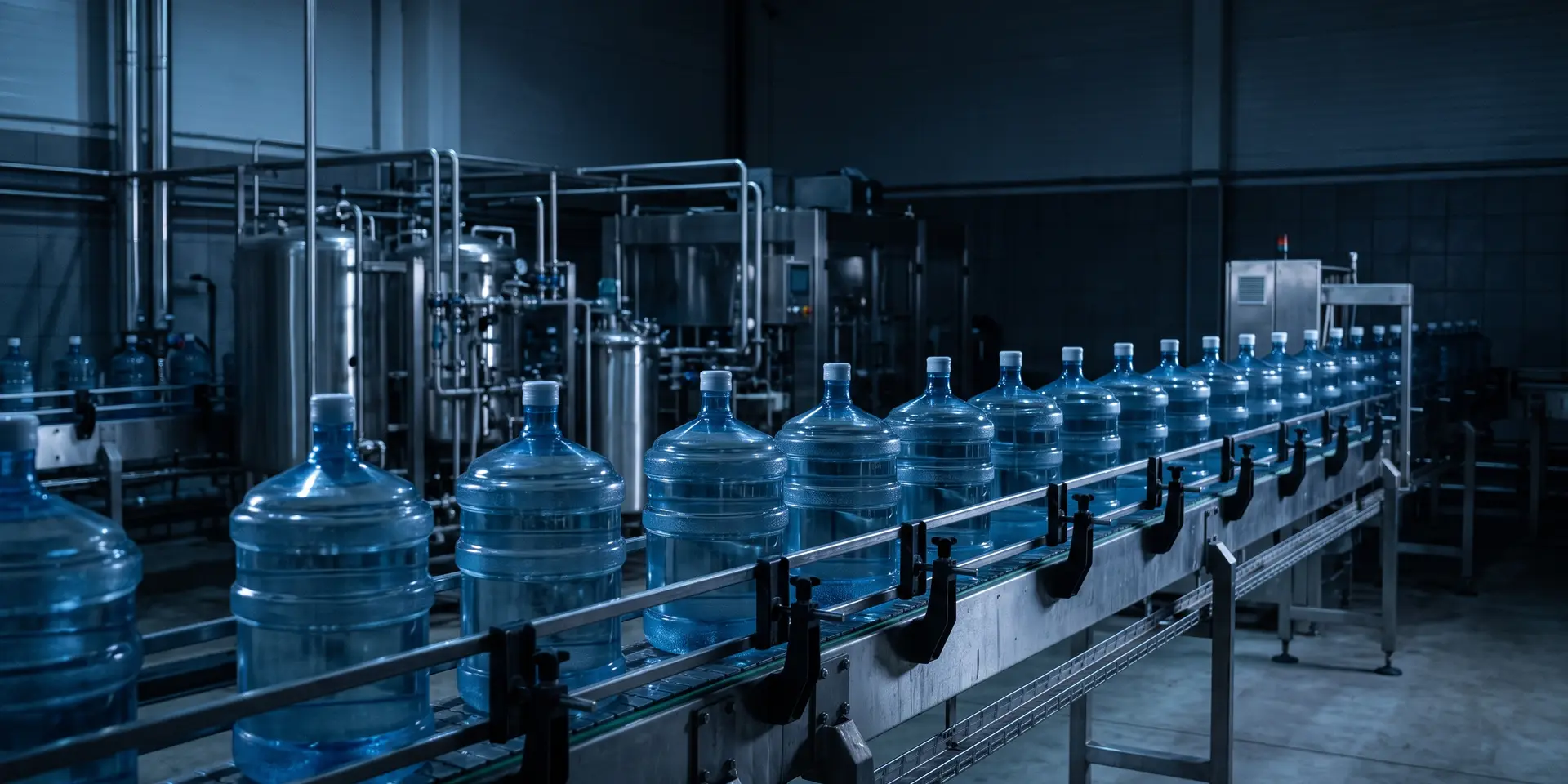
The main thing to know before ordering: mineral water is not bottled in 19-litre bottles. No delivery service in Tashkent does it, and it is not a matter of range. Water with noticeable dissolved solids leaves deposits on the walls of a cooler and is not meant to be drunk by the litre every day. The big bottle holds artesian drinking water, while mineral water comes in small bottles — from a third of a litre to five.
Our shelf mostly carries table waters from local wells and a few medicinal table brands whose names are familiar from childhood. We deliver them by the pack together with your regular order: nobody sends a separate van for one pack, and in a shared route it fits in with no delivery surcharge.
How to tell a genuine brand from a lookalike
Named waters are faked more often than regular drinking water: they have a recognisable label and a price above the shelf average. The good news is that you can check in half a minute without any instruments — by five things that cost a counterfeiter more to reproduce than the product is worth.
- The cap sits tight, the tamper ring does not turn under your finger and stays on the neck as a neat band rather than a torn strip
- The label print is crisp, with no doubled letters or smudged edges; the composition is set in a readable size, not tiny print on a fold
- The date and batch number are embossed or laser-printed on the bottle or the cap itself, not stuck on with a paper sticker over the label
- Water in a sealed bottle is clear: cloudiness, flakes or sediment at the bottom are a reason not to open it at all
- A familiar brand is never priced noticeably below the market: a gap of one and a half times means either someone else’s water in a familiar bottle or an expiring date
A separate case is a name that resembles a well-known one: one letter changed, the same font, a bottle of the same shape. Formally it is a different product from a different producer, and you have no claim against it. The same habit saves you — read not the name but the composition line below it.
There is a third kind of mix-up, harmless in intent and annoying in result: one brand may have several waters from different wells in almost identical labels, told apart only by the colour of the cap and a small line stating the type. You pick up the usual bottle and discover at home that it is a different water. The same thing helps: read the type and the total dissolved solids before the till, not after.
With delivery all of this is simpler. We name the brand before the van leaves, and if the item you asked for is out of stock, we tell you in advance and offer a replacement with a similar composition rather than quietly slipping in a lookalike bottle. When you take the pack, check the bottling date on the side of the box — you can see it without opening it.
About imports, plainly: imported water costs more not because it is better but because its price includes the journey. Local table water can have exactly the same composition and is often fresher by date — there is no need to haul it halfway across the country. An imported brand makes sense where someone wants precisely the taste they are used to, and that is a legitimate reason, just not one that has anything to do with quality.
Mineral water prices and what makes them up
A half-litre bottle of mineral water costs 4 000 UZS. The price covers the water itself, the bottle, carrying it up to your floor and delivery across the city as part of a shared order. Mineral water in glass costs more — 9 000 UZS for a 0.33 L bottle: glass is heavier, breaks and costs more to transport, and that is the only reason for the difference.
Beyond that, the price depends on the size of the order. A pack costs exactly what twelve bottles do, but from two packs city delivery is free, and buying wholesale — for a café, an event or an office kitchen — brings the price itself down. We quote the exact price for a large batch in the chat: it depends on the brand and on how many packs go into one delivery.
How many packs to order and where to keep the stock
Mineral water is bought not for every day but for occasions: with meals, when guests come, for the meeting room, for the road. So the calculation is different from that for cooler bottles: you count not litres per person per day but the number of occasions per week.
| Who buys | How it is used | Packs per month |
|---|---|---|
| A family of two or three | With dinner and at weekends | 1–2 packs of 12 bottles |
| A family with frequent guests | For the table and at weekends | 3–4 packs |
| An office of 10 people | Meeting room and client meetings | 2–3 packs |
| A small café | Served to guests with their order | 6–10 packs |
| An event for 50 people | A bottle per guest plus a reserve | 5–6 packs, one-off |
The figures in the table are a guide for the first week, not a rule. Real consumption becomes clear by the second delivery: if half of the last pack is left, the volume is cut; if it is gone in five days, it is increased. Erring on the low side is no problem — bringing one more pack is easier than finding room for three extra.
Where you keep the stock matters more than it seems. Put the box in a dark corner of the pantry, on the bottom shelf of a cupboard or in a cool part of the kitchen — but not on the balcony and not next to a radiator. Direct sun warms a bottle even through glass, and heat makes plastic give the water a smell that never goes away. Glass packs, in addition, are not stacked more than two high: the bottom bottles bear weight worse than the strength of glass suggests.
There is no need to fill the fridge with the whole pack — before serving, chill only as many bottles as will be drunk that evening. Water that has been chilled and allowed to warm up again loses nothing, but it builds up no reserve of cold either, and it takes up space in the fridge.
A separate word on shelf life. It is shorter for plastic than for glass and runs from the bottling date, not from the day of purchase. Buy as much as you will get through in two or three months: a six-month supply turns, towards the end of its date, into water that is fine to drink but that you no longer want to put on the table.
A restaurant or café calculates from the other end — from the number of covers, not the number of occasions. A thirty-seat café works from last week’s experience: however many bottles went to the tables, that is what it orders, with a small reserve for the weekend. A mistake here costs more than at home: an empty shelf on a Friday evening means turning a guest away, and five extra boxes in the storeroom take up space you pay rent for.
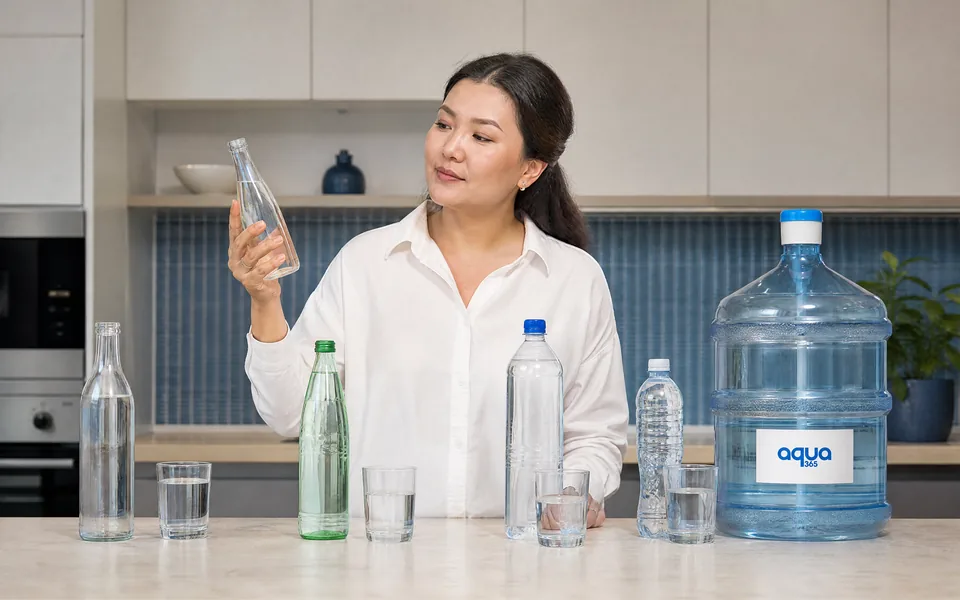
Mineral water in glass and in plastic
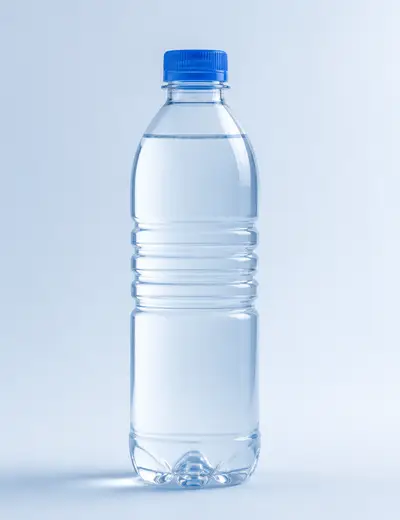
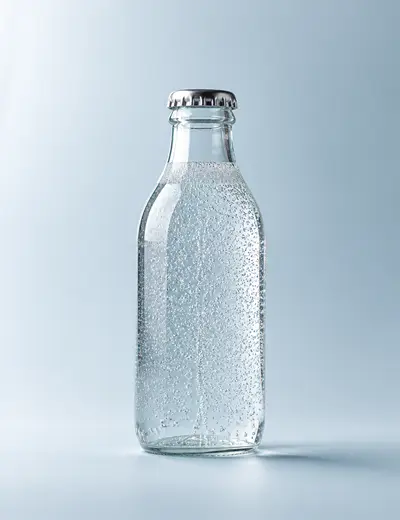
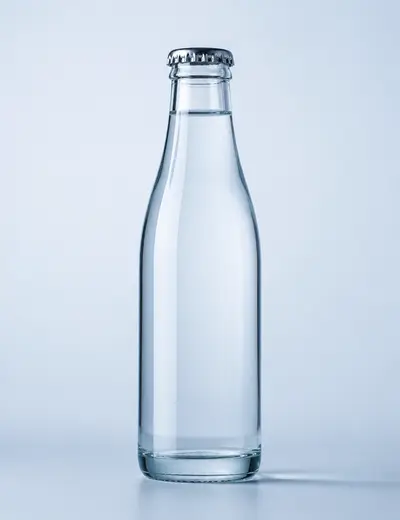
A glass bottle keeps taste and fizz longer and gives nothing of its own to the drink — which is why it goes on the table in restaurants and meeting rooms. There is one downside: the pack weighs three times as much and needs careful handling. Plastic is lighter, cheaper and handier on the road, but an opened plastic bottle is best finished within a day.
Mineral water is bottled in glass almost always in 0.33 and 0.5 litre sizes, in plastic from 0.5 to one and a half litres. There are few large mineral water bottles on the market, and that is no accident: water with minerals is best fresh, while a five-litre container left open for a week loses both its fizz and its taste.
Mineral water in the kitchen: where it fits and where it gets in the way
In the kitchen, mineral water gets used more readily than it should, and half of those uses work against the result. The salts the water is bought for behave like an extra ingredient in cooking: they cause limescale, change the taste of a stock and interfere with dough.
- Kettle and coffee machine — no: deposits from water with noticeable dissolved solids build up several times faster, and in an espresso the salts come through as a separate note on top of the coffee
- Soup and porridge — no: the stock takes on a salty background you cannot correct later by salting to taste
- Dough — it depends: lightly sparkling water makes it airy, while a bitter sulphate water will spoil plain baking
- Ice — yes, if the water is still: cubes made from sparkling water crack and foam in the glass
- Soaking grains and pulses — no: hard water slows down cooking, and beans stay firm longer than usual
Serving is a separate matter. Table water goes on the table chilled to eight to twelve degrees: any colder and the taste of the salts disappears altogether, any warmer and a bitterness comes through. Lemon and mint go into a neutral bicarbonate water; they are not added to sulphate or chloride waters — their own taste already fills all the room.
The vessel matters less than the temperature, but it does matter. A glass bottle is put out as it is, while water from a plastic one is poured into a carafe — not out of snobbery, but because a plastic bottle on the table warms up within half an hour, whereas a carafe with ice holds the temperature until the end of dinner.
Another common use is diluting juices and fruit drinks. The same taste rule applies: a neutral water dilutes without competing, while a sulphate water pushes forward and leaves a bitter aftertaste. If you want bubbles in homemade lemonade, take a lightly sparkling table water and add it last, straight into a glass with ice, not into a jug an hour before the guests arrive.
And finally: this water is not boiled in advance. When heated, some of the salts precipitate and settle on the walls, the taste turns flat, and the point of buying it is lost. The practical takeaway is to keep two waters in the kitchen: regular drinking water for the kettle, the pot and anything that gets heated, and mineral water for the glass, the carafe and the table.
Five mistakes when buying mineral water
The mistakes repeat from order to order, and all five cost money or disappointment. They are easy to spot in hindsight and hard to spot at the shelf: each looks like a sensible decision right up to the moment the bottle is opened.
- Buying by name. A brand tells you about the producer, not about what is in the bottle: one plant’s range may include both a neutral table water and a bitter sulphate one.
- Mixing up the groups. The words “medicinal table” are not a mark of quality or a higher class but an indication of how it is meant to be drunk: this is not water you put on the table by the jug every day.
- Buying a large volume. One and a half and five litres are almost always too much here: an opened bottle loses both its fizz and its taste, and the rest gets finished reluctantly.
- Not checking the date. Small bottles have a short shelf life and sit on the shelf for a long time — the habit of checking the bottling date pays off the very first time.
- Buying one bottle at a time. A pack costs exactly what twelve bottles do, and from two packs delivery is free — buying singly saves nothing and only adds more orders.
The sixth mistake is not about buying but about expectations: people buy the water expecting an effect and get water with a different taste and a different composition. That is its whole honest point — the salts the rock brought with it and the difference in taste they give.
It is also worth saying what is not on this list. None of the mistakes has to do with the water itself: a bottle with a fresh date and an intact cap is exactly what it says on it. Everything listed is about choice, not about safety.
If you do not know where to start, take one pack of still bicarbonate table water and one of sparkling, and see which goes faster at home. That experiment costs less than any advice and answers exactly the question you have.
How to order mineral water in Tashkent
The easiest way is to get it together with your bottles: message us on WhatsApp with how many packs and which brand, and we will add them to the next delivery. Orders placed before 10:00 go out the same day, and you choose the delivery window yourself — 9–13, 13–17, 17–21. We have one day off: Sunday.
In one order you can buy both mineral water and regular drinking water: the price of a 19 L bottle does not change and stays at 21 000 UZS each when you order 2 bottles or more. In that case delivery within the city is free, the courier collects the empties on the next visit, and if the brand turns out to be out of stock, we tell you before the van leaves, not on your doorstep.